My Thirty-Buck Motor Whooped a $150 Rocket — Here's When Price Actually Matters
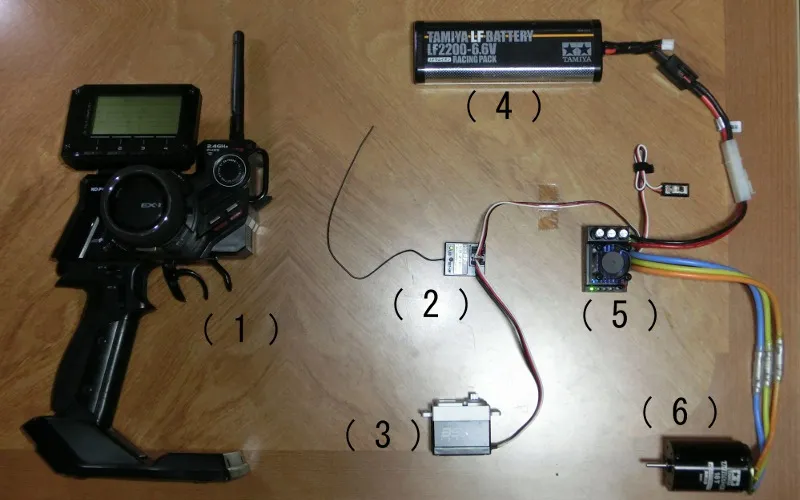
Photo: Shingo.a, CC0, via Wikimedia Commons
Let me get this out of the way up front: I like nice motors. I've got a drawer full of them. But I'm tired of the hobby's open secret — that a huge chunk of the "pro motor" market is selling confidence, not speed.
So I ran an experiment this season. Three tracks, two motors, one slightly embarrassed wallet.
The Setup
The contenders:
- The Budget Bruiser: a $30 stock-spec 17.5T sealed sensor motor, bought on sale, zero mods
- The Wallet Buster: a $150 adjustable-timing modified monster with all the titanium-flavored marketing you'd expect
Same buggy, same tires, same gearing where rules allowed, same mediocre driver (me). I ran both at three club tracks around the Southeast — a tight indoor carpet oval, a flowing outdoor clay track in Georgia, and a rough, dusty backyard-style layout in Tennessee.
The Results (Prepare to Be Annoyed)
Indoor carpet, tight layout: Dead heat. Within two tenths over a full run. The tight track simply didn't have enough straight to let the expensive motor stretch its legs.
Outdoor clay, flowing layout: The $150 motor won — by about four tenths a lap. Real, but not the butt-kicking the price tag implies.
Rough backyard dirt: The $30 motor won. Not because it was faster in a vacuum, but because the premium setup's extra punch just spun the tires over every bump, while the milder stock motor hooked up and drove away.
Three race days. One win each, one tie. The scoreboard says what the marketing doesn't.
Why This Keeps Happening
Here's my theory: above a certain baseline of quality — which today's $30 motors blow past — the driver becomes the bottleneck. A modern stock motor with a decent ESC delivers more consistent power than most club racers can use. The remaining gains from a premium setup live in the last five percent, and that five percent is locked behind seat time, not checkout buttons.
There's also a placebo effect worth naming. When you bolt on the fancy motor, you drive harder because you believe. That's worth something, but you could get the same boost from a $5 sticker and a pep talk.
When the Expensive Motor Genuinely Pays Off
I'm not here to tell you premium motors are a scam. There are real situations where they're the right call:
- Big, fast outdoor tracks. Long straights let adjustable timing and higher-RPM wind payoff actually show up on the lap chart.
- Modified class racing. If the rules open the door, the adjustable timing and better rotor quality matter. Full stop.
- Heavy vehicles. Short-course trucks and scalers work motors harder, and the thermal headroom of a premium can is the difference between a fast run and a DNS.
- Long mains. Better efficiency means your last five minutes look like your first five. That's a legitimate competitive edge in 10-minute A-mains.
- Sponsored or points-chasing seasons. When tenths equal trophies and somebody else is buying, take the good stuff.
My Honest Recommendation
If you're a club racer running 17.5 or 13.5 spec on a typical American track — and that's most of us — spend the $120 you saved on tires, a better servo, and entry fees. That combination will win more races than the motor ever would.
If you're chasing the top step at a big regional, running mod, or building something heavy? The premium motor earns its keep.
The podium doesn't care what you paid. It cares what you did with it. Now if you'll excuse me, I need to decide whether that $150 motor goes back in the drawer or on the swap table — and honestly, the drawer is winning.