One Kit, Two Personalities: How We Built the Same Buggy for Bashing and Racing (And Why They Feel Like Different Cars)
Photo: MikeRun, CC BY-SA 4.0, via Wikimedia Commons
Same Box, Same Parts, Totally Different Animals
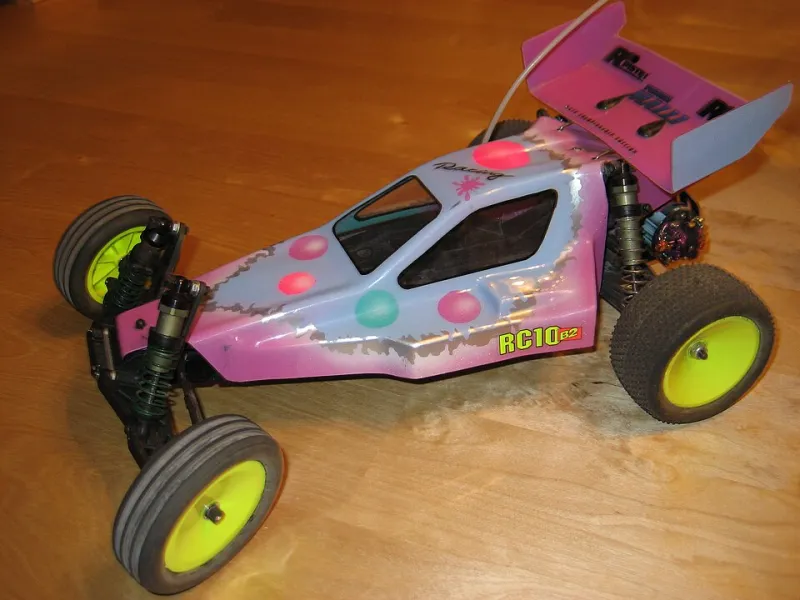
We ordered two of the same 1/10 4WD buggy kits, built them side by side on the same bench, and handed one to our basher-in-chief Marcus and the other to our track rat Dana. Same plastic, same screws, same manual. By the end of the weekend, they might as well have been two different hobbies.
If you've ever wondered whether you're a backyard basher or a track boss, this build log is for you.
Suspension: Comfort vs. Contact Patch
The backyard build: Marcus wanted the thing to soak up curb drops, sprinkler heads, and the occasional ill-advised jump off the deck stairs. We went with soft springs (about 30% lighter than stock), 40wt silicone oil up front, and droop set generous so the arms could extend over roots and divots. Ride height sat a full 5mm higher than the race car. The body roll is real — and that's the point. It lands nose-heavy off jumps and just... keeps going.
The track build: Dana's car sits low and stiff. Medium springs, 35wt front / 30wt rear, and ride height dialed so the chassis barely clears the bumps on a blue-groove clay line. We added anti-roll bar stiffness up front to keep the inside wheel planted mid-corner. It looks twitchy on a driveway. On a groomed track, it's on rails.
Gearing: Torque Monster vs. Lap Time Machine
Marcus runs a taller pinion — something like a 17T on a 76T spur — because out in the yard, top speed is fun and heat buildup is manageable when you're not on the throttle constantly.
Dana geared shorter, around a 15T, to snap out of hairpins instantly and keep temps under control during five-minute A-mains. On a small club track, acceleration wins races. Nobody's hitting top speed anyway.
Tires: The Single Biggest Difference
If you only change one thing, change this.
- Backyard: Long-wear all-terrain pins. We ran them until the knobs literally rounded off. Grip is a suggestion out there; durability is the whole game.
- Track: Soft clay compound, glued, with fresh foam inserts. Dana swaps them based on moisture. A 15-minute window on Wednesday watering day matters more than any shock tune we did.
The Crash Test Anecdotes (There Were Several)
Marcus's build ate a 6-foot drop off the playset slide and needed a new front arm and a body clip. Total repair: eight minutes.
Dana's build clipped a pipe at the track's edge during practice and cartwheeled into the pit lane. Repair: a bent hinge pin, a bruised ego, and a reminder that low ride height plus soft clay equals occasional lawn darts.
Then we swapped drivers for a session. Dana found the bash car "floaty and exhausting." Marcus called the race car "scary, like it's mad at me." Neither was wrong.
Lap Times and the Honest Verdict
On our local clay layout, Dana's setup ran a full 2.8 seconds a lap quicker than the bash build. In the yard, the bash build ran twice as long between repairs and cost less per hour of fun.
Here's our take: if you're within 20 minutes of a club track, build the race car and go race — the learning curve is half the hobby's joy. If your nearest track is an hour-plus away, the bash build will get used every weekend instead of every other month.
The real shock wasn't which setup was better. It was realizing most of us need permission to admit which driver we actually are. Pick the one you'll drive more. That's the fast one.