Resurrecting a Thrift Store Shelf Queen: The Garage Beater Every Racer Needs

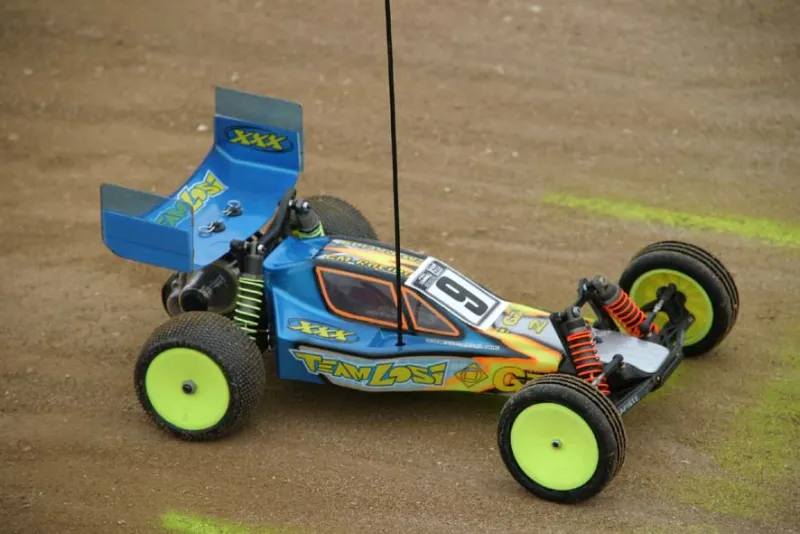
Photo: Biswarup Ganguly, CC BY 3.0, via Wikimedia Commons
There's a specific kind of RC car you'll find at Goodwill, estate sales, and the bottom of swap meet bins across America. It's dusty. It's missing a body clip or four. The battery door is held on with hope. Somebody's kid got it for Christmas in 2011, ran it for a summer, and it's been in a closet ever since.
We bought one for $50. Then we made it awesome. Here's how.
First, the Triage: Is It Even Worth Saving?
Not every shelf queen deserves a second life. Before you hand over cash, flip it over and run this quick checklist:
- Spin the wheels by hand. They should turn freely. Grinding or total lockup means a seized gearbox — walk away unless it's basically free.
- Check the steering. Turn the front wheels and feel for stripped servo gears. That telltale clunky, skip-skip-skip feeling is a $15 fix, not a dealbreaker.
- Look at the diffs. Grab a wheel and try to spin it while holding the other drive wheel. Sloppy, free-spinning behavior on one side usually means a blown diff out — annoying but fixable.
- Cracks in the chassis or suspension arms? Hairline cracks are fine for a beater. A snapped-in-half bulkhead on an obscure no-name brand means parts availability will be your enemy forever.
- Does the brand exist? A quick phone search for the model name saves heartache. Obscure toy-grade stuff from the mall is a dead end. Anything from Team Associated, Traxxas, Losi, ECX, or Arrma has a massive parts ecosystem.
Our $50 find was a beat-up ECX Torment short course truck — cosmetic disaster, mechanically sound. Perfect.
The Teardown and Deep Clean
Even a "clean" thrift store car is hiding a decade of garage gunk. Tear it down to the chassis. It's the best way to learn how a car goes together, and it takes an afternoon.
- Soak metal parts in denatured alcohol and hit them with a toothbrush.
- Blow out the diff and gearbox with compressed air — sand is the silent killer.
- Toss any puffy or corroded NiMH packs straight into the recycling. Do not charge mystery batteries. Ever.
- Rebuild the diffs with fresh grease. A $4 tube of diff grease transforms a sloppy drivetrain.
This is also when you replace every bearing you can. A $12 bearing kit makes a bigger difference on a crusty old car than any speed upgrade ever will.
The Only Cheap Upgrades That Actually Matter
The temptation with a beater is to throw parts at it. Resist. After testing on our gravel driveway and a vacant lot behind the Vipers RC home track, three upgrades earned their keep:
- A real battery and charger. A basic 2S LiPo and a smart charger with a proper storage mode runs about $60 total and instantly doubles runtime and punch compared to the wall-wart NiMH setup.
- Tires. Stock toy tires are hockey pucks. A set of cheap all-terrain tires for $20 is the single biggest performance change per dollar on any RC car, period.
- Metal-gear servo. If the stock servo stripped during triage, upgrade rather than replace. $25 gets you torque and durability that survives a beater's lifestyle.
Skip the aluminum everything. On a bash car, aluminum parts just transfer the breakage to something more expensive — usually your diff housing or your mood.
Why Every Racer Needs a Car They Don't Care About
Here's the part nobody tells you: the beater makes you better. When your race buggy costs $600 and every landing makes you wince, you drive scared. You set up for the safe line. You flinch on the doubles.
The beater has no stakes. You can send it off the loading dock ramp, drive it into a drainage ditch, and let your nephew run it into the fence — and the worst case is a $6 suspension arm. That freedom is where car control actually gets built. Half the fast guys at our local club learned throttle discipline on cars exactly like this one.
It's also the ultimate test bed. Curious whether you'll like a different pinion or a stiffer shock setup? Try it on the beater first, where a wrong guess costs you nothing.
The Finished Product
Final tally on our Torment: $50 purchase, $12 bearings, $20 tires, $60 battery and charger, $25 servo, and a can of flat black spray paint for the scuffed body. Call it $170 all-in, and it's now the most-grabbed car in the fleet on rainy-day garage nights.
So next time you're at a yard sale and spot a dusty chassis under a folding table, take the chance. Triage it, clean it, upgrade the three things that matter, and let it be ugly. Your race program will thank you — and so will your wallet.