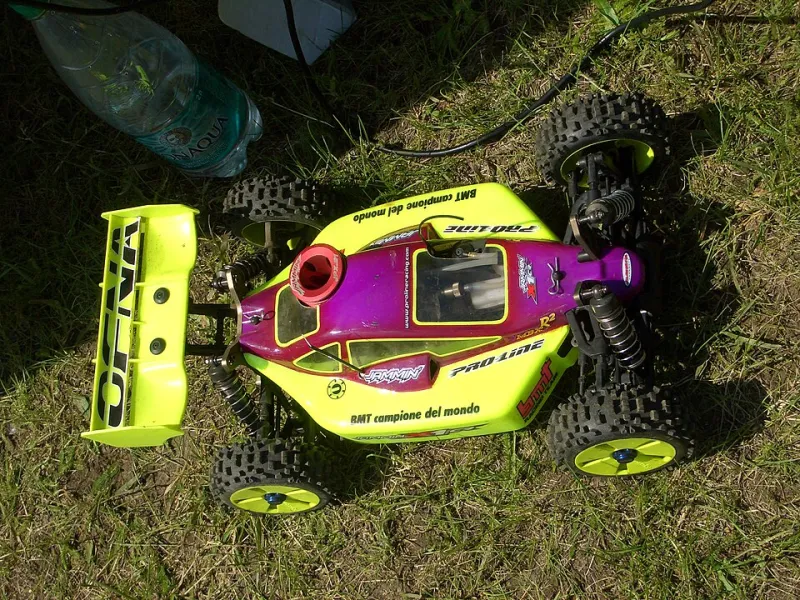
Before the Tone: The Ten-Minute Walkaround That Saves Your Main Event
Every club race has the same sad little scene. A driver is up on the stand, transmitter in hand, car pointed at the first corner, and nothing happens. Or something happens, but it is the wrong something. The car stutters, the steering goes lazy, a wheel exits stage left, and just like that the main event is a memory. We have been that driver. We have also been the pit neighbor who could have caught the problem in ten minutes with a car on a stand and a little discipline.
This is not a bring-every-spare-part lecture. You can own every hex driver in the county and still DNF because you never looked at the one screw that mattered. The Vipers RC walkaround is about sequence, not inventory. It is ten minutes of quiet attention before the first heat, and it catches the boring failures that ruin good race days.
Start With the Car Off the Ground
Put the car on a stand or a block. Everything downstream gets easier when the wheels are free and you are not chasing the thing around a pit table. Before you touch a tool, do a slow lap around the car with your eyes. Look for the obvious. A body clip hanging by a thread. A shock cap that has been weeping. A wire that has wandered somewhere it should not be. This is not diagnostics yet. It is just noticing.
We do this in the same direction every time, starting at the front-left and working clockwise. Same order, same ten minutes, fewer surprises. Muscle memory beats panic every single time.
Wheels, Nuts, and the Five-Second Heartbreak
Spin each wheel. It should turn freely and stop like it means it. Then check the wheel nut. Not a wiggle with your fingers because your fingers are optimistic. Use the wrench. A nut that is snug but not tight is the classic race-day traitor, especially on a car that has been run hard in practice. If you run alloy hexes, check for wear or rounding. If you run plastic wheels, check the hex pocket for slop. A wheel that wobbles on the hex will feel like a handling problem right up until it becomes a parts problem.
While you are there, check for play in the wheel bearings. A tiny bit of rock is normal on some cars. A gritty grind or a wheel that keeps spinning like a fidget spinner is not. That bearing is telling you it is tired.
The Slipper Clutch Is a Wear Item, Not a Mood
If your car has a slipper, this is the check most people skip because it lives under a gear cover and requires actual thought. The slipper is supposed to slip. It is not supposed to be a mystery. Do a quick roll test or a short blip on the bench with the wheels off the ground, depending on your setup. If the car sounds like it is winding up without delivering, or if the slipper has gone from consistent to vague, stop and deal with it now.
A tired slipper does not always fail dramatically. Sometimes it just makes your car feel slow and your driving look worse than it is. Ten minutes at the pit table is cheaper than ten laps of wondering why the car has no punch out of the corner.
Radio Battery: The Least Glamorous DNF in RC
Check the transmitter pack. Check the receiver pack if you run one. Know what full looks like on your radio and do not guess. A transmitter that beeps at you during the main is not a personality quirk. It is a countdown timer. We charge the night before and verify at the track. If your radio uses AAs, replace them on a schedule instead of waiting for the low-battery warning to become a lifestyle.
This is the check where discipline matters most because nothing looks wrong. The radio turns on. The steering moves. Everything is fine until it is not. Spend the thirty seconds.
Servo Leads, Connectors, and the Art of the Gentle Tug
Follow every wire with your eyes and then give each connector a gentle tug. Gentle. You are checking for a click, not trying to remove the plug. Servo leads take a beating from steering throw, body rub, and general vibration. A lead that is frayed near the plug or rubbing on a chassis edge is a future glitch that will show up at the worst possible moment.
Look at the antenna, too. If it is pinched, kinked, or routed next to a power wire, fix it. Reception problems do not announce themselves politely. They show up as a car that does something you did not ask it to do.
Screws, Shock Caps, and the Ten-Second Stare
Do a quick pass over the obvious fasteners. Motor mount screws, shock tower screws, steering rack screws, and the ones that hold your servo in place. You do not need to torque every screw on the car. You need to catch the one that has been backing out since the last heat. A small hex driver and a calm hand are enough.
Then look at the shocks. Check for fresh oil at the caps and around the shafts. A weeping shock is not automatically a disaster, but it is information. If you see it now, you can decide whether to top it off, rebuild it, or run it and accept the compromise. That is a much better conversation than the one you have after the car starts hopping through the rhythm section.
The Final Radio Check and the Walk to the Stand
Turn everything on in the right order. Check steering direction, throttle direction, and failsafe if your radio has one. Do a range check if you have not done one recently. Listen to the car. A healthy drivetrain has a clean, predictable sound. A crunchy one is trying to tell you something.
Then put the body on, check the clips, and walk away. The walkaround is done. You are not going to find every possible failure, and you are not trying to. You are trying to catch the common ones before they catch you.
The tone is going to sound whether you are ready or not. Ten minutes of honest attention will not make you faster by itself, but it will keep you in the race long enough to use the speed you already have. That is the whole trick. Build fast, race faster, and check the wheel nuts before the main.