Dirt Doesn't Lie: Reading the Clay Before the Competition Even Unloads Their Boxes
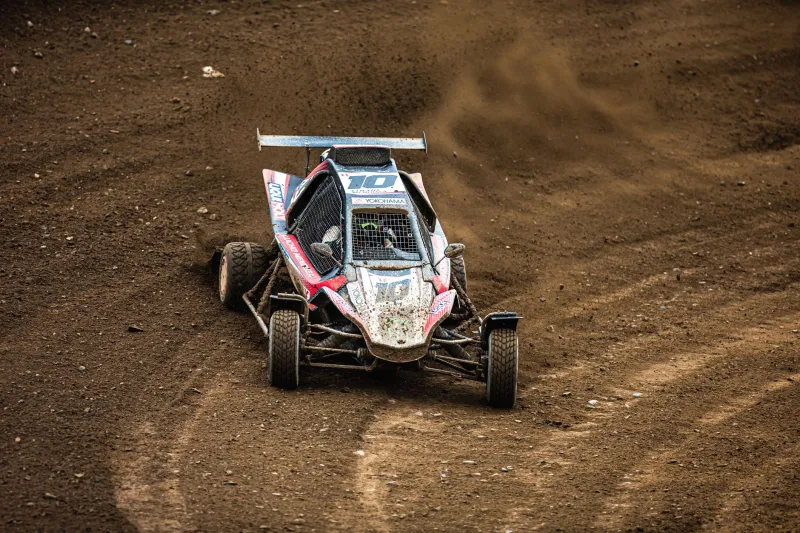
Every club race has that one guy. He shows up, walks the track with a coffee in hand, barely turns a wrench, then qualifiers on the front row. Meanwhile, the rest of us are swapping diff oils and blaming our radios. After six seasons with the Vipers crew, we've learned his secret isn't talent — it's that he read the dirt before anyone else did.
Clay tracks are living things. They change from the first practice lap to the main, and if you're tuning for the surface that existed at 8 a.m., you're racing a setup that died two hours ago. Here's our ten-minute routine for figuring out what the track is going to do — and what rubber to bolt on.
The First Three Minutes: Walk It Like a Detective
Don't just stroll the racing line. Walk the whole thing. Squeeze a pinch of dirt between your fingers at each corner. Dry, dusty clay that crumbles will water out fast and groove up by round two. If it packs into a ball like Play-Doh, the track's got moisture in it and will stay tacky longer — meaning grip comes early and might fall off a cliff later.
Pay attention to the spots nobody races on. The inside of tight corners, the landing zones past big triples — those areas tell you what the track looked like before the water truck. If the off-line dirt is bone dry, the groove is going to tighten all day. If it's damp, you'll get a wide, high-grip surface that rewards aggressive lines.
Minutes Four Through Seven: Watch Someone Else Suffer
Once practice starts, stop wrenching and watch. Seriously. Put the car down, grab a fence spot, and watch the fast guys' tires. Are they throwing roost or sliding on exit? Is the groove dark and blue-grooved smooth, or still loose on top?
A track that's grooving after two heats is a tire problem waiting to happen. What hooked up in round one will be useless by the main as the surface glazes over. We've watched guys qualify TQ on soft pins and then finish B-main because they never swapped tread while the track aged a decade under them.
Minutes Eight Through Ten: Pick Your Poison
Now the tire call. The safe play is whatever won last week. The smart play is what the track is becoming.
Our rule of thumb: if the groove is forming and the surface is slickening, go one step firmer or one step less aggressive than everybody else. When the whole field is on soft supersoft pins and the track turns to glass, that's when an unorthodox pick — a harder compound, a shorter pin, even a ribbed front — suddenly makes you the only car on the track that isn't skating around.
Some of our best Vipers results came from a tire pick that got laughed at in staging. A firmer tread on a glazed-over track means you can actually accelerate off the corner while everyone else is spinning their wheels. You don't need the most grip in the field. You need the most usable grip.
Building a Two-Tire Arsenal Without Going Broke
Here's the budget truth: you don't need eight sets. You need two.
Tire one: the workhorse. A medium-soft pin tread that covers the widest range of conditions. This is what you mount for practice and qualifying, and it handles 70% of what a clay track throws at you.
Tire two: the specialist. Whatever your local surface trends toward as the day goes on — usually a firmer compound or a tread designed for the groove. This is your main-event tire, your ace in the hole when the track flips.
Buy them on sale, buy them in bulk with a club teammate, and mount them on spare wheels ahead of time so the swap takes ninety seconds in the pits instead of twenty minutes of gluing the night before.
Trust the Dirt, Not Your Ego
The hardest part of track reading is admitting the conditions changed. Nobody wants to swap a good tire after a strong qualifier. But the clay doesn't care about your feelings — and the guy who read it right at noon is going to be standing on the box at five.
Walk early. Watch often. Pick the tire nobody else brought. That's the whole game.