Your First Two Laps Are Worth More Than Your Next Twenty: The Vipers Track-Walk Method
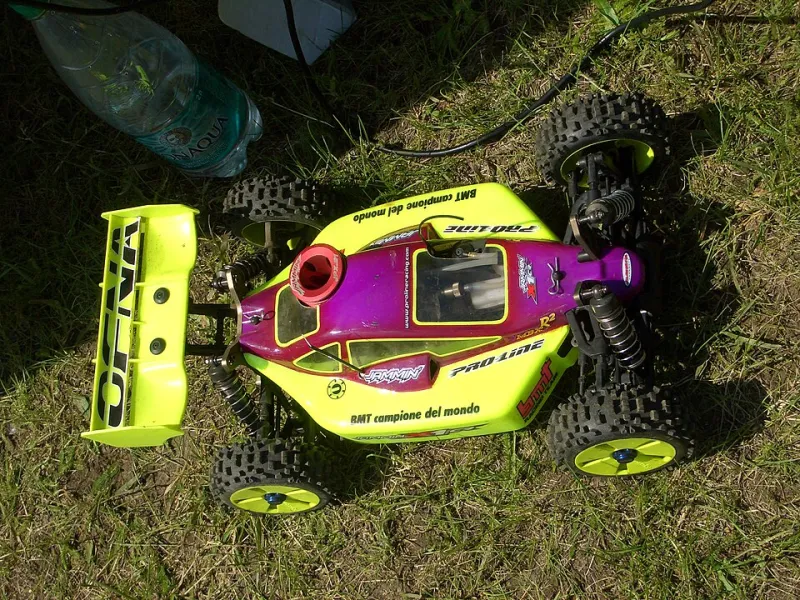
Photo: Itrados, Public domain, via Wikimedia Commons
There's a moment at every club race that separates the guys who make the main from the guys who watch it: the first hour on a new track. Most drivers burn twenty laps just figuring the place out. The Vipers crew burns five — because we treat practice like reconnaissance, not seat time.
This isn't some secret sauce. It's a repeatable routine, and after a season of running it at tracks from Southern California clay to a brutal indoor carpet oval in Ohio, we're finally writing it down.
Why Lap Counting Is a Trap
The instinct is simple: more laps equals more speed. But if you're just circling and reacting, you're memorizing mistakes. Your brain logs the wrong line, the late braking point, the sketchy jump timing — and unlearning that stuff mid-race is brutal.
Instead, we front-load the thinking. Two deliberate, slow, analytical laps beat twenty reactive ones. Here's how we break it down.
Lap Zero: The Walk
Before a single car hits the surface, walk the layout. Not a casual stroll — an actual investigation. Our checklist lives in every pit box, and it covers four questions:
- Where's the money jump? Every track has one feature that decides races. Usually it's the triple or the long step-up where the field compresses and passes happen. Find it first.
- What's the corner before it? The jump is only as good as your approach. A bumpy or off-line entry kills your pop no matter how good your throttle finger is.
- Where does the track narrow? Choke points are where first-lap wrecks breed. Know them so you're not the guy causing the pileup in turn three.
- What's the surface doing? Blue groove? Loose dust on top? Sweeping a corner with your shoe tells you more than ten practice laps.
Lap One: The Slow Lap
First lap out, we drive at maybe 60% pace. The goal isn't speed — it's mapping. Feel where the track flows naturally and where it fights you. Notice which lines your car wants to take without being forced. If your buggy drifts wide through a sweeper, that might be your line. Fighting the natural flow all race is exhausting and slow.
Also use this lap to test the jumps at conservative speed. Find the minimum commitment for every feature so you know your floor, then build up.
Lap Two: The Line Test
Second lap, pick one alternative line per corner section and try it. Inside vs. outside through the hairpin. Tight single-double vs. sending the triple. You're not looking for the fastest line yet — you're looking for lines that match your driving style.
Here's the truth nobody says out loud: the technically perfect line isn't always fastest for you. Our mid-motor guy is surgical and loves the tight inside stuff. Our teammate hammers wide, carries more speed, and lets the car slide. Same track, opposite answers. Run the experiment, then commit.
The Checklist
We laminated this thing after losing it twice in the pits:
- Identify the deciding jump
- Check the approach to that jump
- Note all choke points
- Test surface grip by foot
- Slow lap: map natural flow
- Jump minimums established
- Alternate lines tested
- Pick your two lines and stop experimenting
That last one matters. By the time qualifying starts, you should have a plan, not a pile of options. Indecision on lap one of a qualifier costs more time than any setup issue.
When It Goes Wrong
Look, some days the track doesn't cooperate. Groove comes in, dust blows across the back section, and your lap-two homework is obsolete by round two. That's fine — the method still works because you've trained yourself to read conditions, not just memorize them. When the surface changes, you re-read instead of panicking.
The track will always tell you what it wants. Most drivers just never slow down long enough to listen.